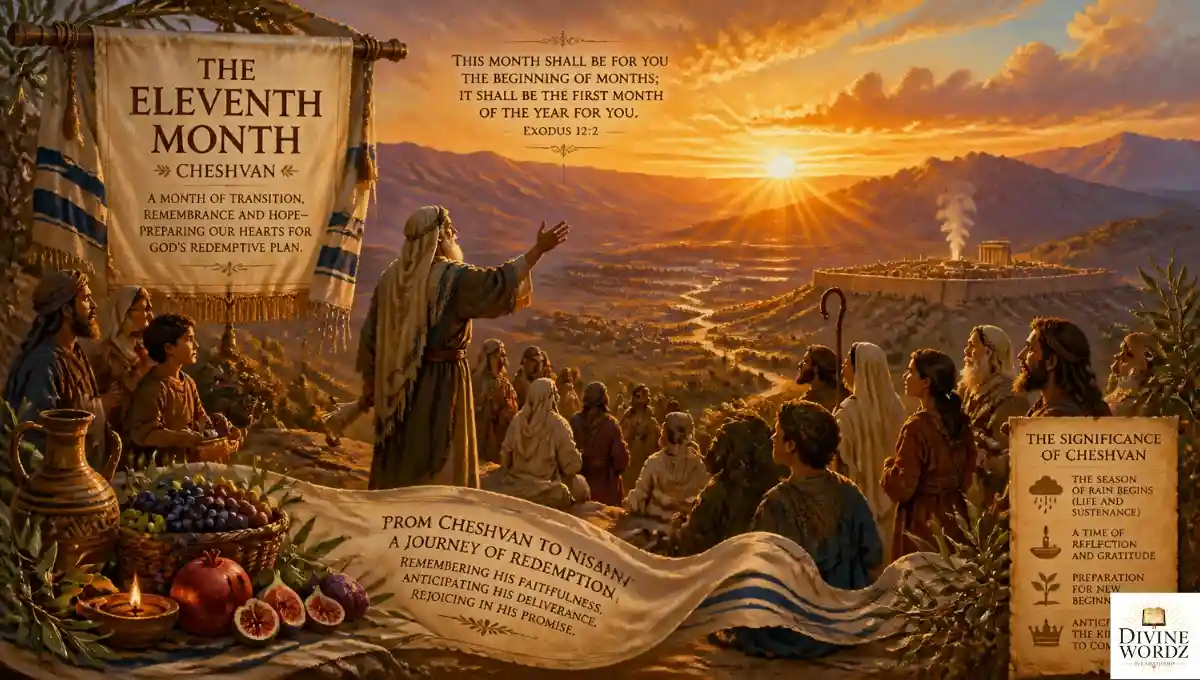
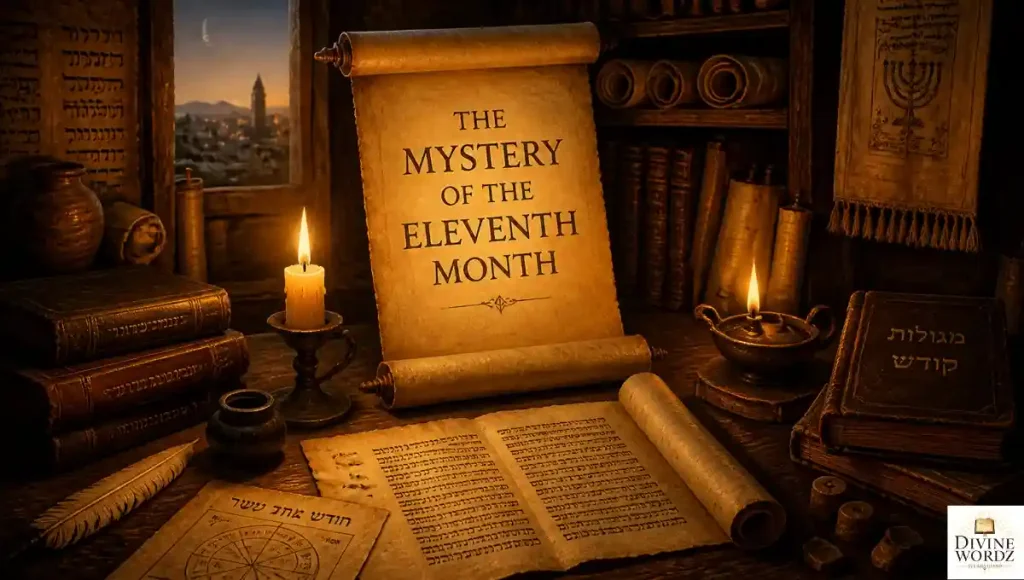
The eleventh month appears quietly in Scripture, yet it carries real weight in the Hebrew calendar, Bible study, and Christian tradition. Many readers confuse it with November, but the biblical eleventh month is Shevat, a winter month tied to Moses, Zechariah, and renewal.
This guide explains the Roman calendar, the Hebrew calendar, biblical numbers, and key verses in simple words. You will find Bible verses, prayer points, and spiritual lessons for reflection, preparation, and thanksgiving, all backed by Scripture and calendar history.
What Is the Mystery of the Eleventh Month?

The mystery comes from two calendars sharing one number. Scripture counts months from spring, while the modern calendar counts from January, so the same number points to different seasons.
What Does the Eleventh Month Represent?
In the Bible it marks a late-winter season of waiting, teaching, and prophecy. It sits just before the final month of the sacred year.
Why Is the Eleventh Month Called a Mystery?
It is rarely named, and calendar differences blur its meaning. Careful reading removes the confusion.
November and the Eleventh Month Explained
November is the eleventh month of the Gregorian year, while Shevat is the eleventh month of the biblical year. They are different months with different seasons.
What Is the Biblical Meaning of the Eleventh Month?

Biblically, this season is linked to instruction, prophecy, and hope. God speaks at precise times, and these dates remind believers that He is never late.
The Eleventh Month in Scripture
Scripture names it in only a few places, but each mention is meaningful.
What Happened in the Eleventh Month in the Bible?
Moses began his farewell teaching to Israel, and years later Zechariah received a night vision during the return from exile.
Important Biblical Events Connected to the Eleventh Month
| Event | Reference |
| Moses begins his final address | Deuteronomy 1:3 |
| Zechariah’s prophetic visions begin | Zechariah 1:7 |
| Benaiah’s army division serves | 1 Chronicles 27:14 |
Lessons From the Eleventh Month
- Listen to God’s instruction before a big transition.
- Trust His timing during quiet seasons.
- Remember His past faithfulness.
The Eleventh Month in the Hebrew Calendar

The Hebrew calendar begins its sacred year with Nisan in spring. Counting from there, the eleventh month falls in deep winter.
What Is the Eleventh Month Called in the Hebrew Calendar?
It is called Shevat, spelled Shebat in some translations. The name is Babylonian in origin and appears once in the Bible, in Zechariah 1:7.
When Is the Eleventh Hebrew Month?
Shevat usually lands in January or February. It has 30 days and includes the holiday Tu BiShvat on the 15th, the new year for trees.
Shevat and the Eleventh Month Explained
Shevat is the eleventh month of the religious year and the fifth of the civil year. Many believers use it as a season to renew Torah study.
Is the Hebrew Eleventh Month the Same as November?
No. The two almost never match, and Shevat falls about two months after November ends.
Why Is November Called the Eleventh Month?
November holds that title only because of the Gregorian calendar, which starts the year in January.
Where Did the Name November Come From?
It comes from the Latin word novem, meaning nine.
Why Does November Mean Nine?
In the early Roman calendar, the year began in March, making November the ninth month.
How November Became the 11th Month
Two new months, January and February, were added to the start of the year. This pushed November to eleventh place.
The Roman Calendar and November
The name never changed, so the number in the word no longer matches its position. That is a lasting calendar quirk.
History of the Roman Calendar and Month Reform
| Stage | Change |
| Early Roman year | Ten months, starting in March |
| Later reform | January and February added |
| Julian calendar (46 BC) | Fixed 365-day year with leap years |
| Gregorian calendar (1582) | Corrected leap-year drift |
What Does the Number 11 Mean in the Bible?
The number 11 has no official meaning in Scripture. Any symbolism comes from patterns that readers observe, so it is best treated with care.
Is the Number 11 Significant in Scripture?
It appears often enough to notice, but the Bible never assigns it a fixed message.
Biblical Examples Associated With the Number 11
- Eleven apostles remained after Judas (Acts 1:26).
- Eleven days separated Horeb from Kadesh Barnea (Deuteronomy 1:2).
- Eleven goat-hair curtains covered the tabernacle (Exodus 26:7).
- Joseph was the eleventh son of Jacob.
Does 11 Symbolize Transition or Incompleteness?
Some teachers see transition or incompleteness, since it sits just short of twelve. This is an interpretation, not a rule.
How Should Christians Understand Biblical Numbers?
Treat numbers as helpful clues, never as secret codes. Let clear teaching guide every conclusion.
Read More : 185 Good Morning Prayer Messages to Bless Your Loved Ones
The Spiritual Meaning of the Eleventh Month
Spiritually, the season invites slowing down, taking stock, and preparing the heart for what comes next.
A Time for Reflection and Preparation
Quiet seasons are workshops where faith is strengthened.
Looking Back Before the End of the Year
Review your prayers, your habits, and God’s provision.
Preparing for a New Season
God often prepares us before He moves us. Isaiah 43:19 speaks of a new thing springing forth.
What the Eleventh Month Can Teach Us Spiritually
It teaches patience, gratitude, and readiness.
Eleventh Month Symbols and Themes in Christian Tradition
| Symbol | Theme |
| Winter | Rest and waiting |
| Trees (Tu BiShvat) | Growth and renewal |
| Rain | Blessing and cleansing |
| Torah teaching | Preparation and obedience |
Biblical Events Connected to the Eleventh Month
Three passages anchor the topic.
The Eleventh Month in Deuteronomy
On the first day, Moses began his address, recalling God’s covenant before Israel entered the land.
The Eleventh Month in Zechariah
On the 24th day, the word of the Lord came to Zechariah, calling the people to return to God.
The Eleventh Month in the Books of the Bible
Beyond those two, 1 Chronicles 27:14 lists the eleventh monthly division of David’s army.
What These Passages Teach Believers Today
God speaks through teaching, prophecy, and order, and He keeps careful records of our days.
Bible Verses for the Eleventh Month
Scriptures for Strength and Encouragement
- Isaiah 40:31
- Psalm 46:1
Scriptures for Thanksgiving and Reflection
- Psalm 100:4
- 1 Thessalonians 5:18
Scriptures for a New Season
- Isaiah 43:19
- Ecclesiastes 3:1
Scriptures for Hope and Restoration
- Jeremiah 29:11
- Joel 2:25
Scriptures to Pray in November
- Philippians 4:6
- Zechariah 1:3
Prayer Points for the Eleventh Month
- Ask for a grateful and humble heart.
- Pray for wisdom to finish the year well.
- Seek forgiveness and a fresh start.
- Intercede for family, church, and community.
- Invite God to prepare you for the coming season.
Thanksgiving and Reflection in the Eleventh Month
Thanking God for the Past Months
List the ways He provided, protected, and guided you.
Reflecting on Lessons Learned
Write down what challenges taught you about faith.
Giving Thanks for Answered Prayers
Note each answered prayer, big or small, and praise Him for it.
Preparing Your Heart for December
Clear away resentment and clutter so Advent can be received with joy.
How to Prepare Spiritually for the Eleventh Month
- Set a simple daily Bible reading plan.
- Fast or simplify one habit for focus.
- Keep a gratitude journal.
- Join a prayer group or church study.
- Serve someone in need.
Common Misconceptions About the Eleventh Month
- Myth: It always means November. Truth: In Scripture it means Shevat.
- Myth: The Bible gives 11 a fixed meaning. Truth: Symbolism is interpretive.
- Myth: It is a minor month. Truth: Key teaching and prophecy took place in it.
The Eleventh Month vs. November: Are They the Same?
November in the Gregorian Calendar
November is a 30-day autumn month in the Northern Hemisphere, named from the Latin for nine.
The Eleventh Month in the Hebrew Calendar
Shevat is a 30-day winter month counted from Nisan, falling in January or February.
Why the Two Calendars Can Cause Confusion
Both use the same number from different starting points, and many online articles mix them up. Always check which calendar is meant.
Conclusion
The eleventh month is less mysterious once the calendars are understood. In Scripture it points to Shevat, where Moses taught and Zechariah heard from God. November shares the number, but not the season, and the Roman calendar explains why.
Whatever calendar you follow, this season invites reflection, gratitude, and preparation. Use the verses and prayer points above to look back, give thanks, and prepare your heart. The eleventh month reminds us that God is working even in quiet, wintry moments.
Frequently Asked Questions
What is the eleventh month in the Bible?
It is Shevat, named in Zechariah 1:7 and counted from spring.
Is the eleventh month November?
Only in the Gregorian calendar. In the biblical calendar, it is Shevat.
Which verse mentions the eleventh month?
Deuteronomy 1:3 and Zechariah 1:7 both mention it directly.
What happened in the eleventh month in the Bible?
Moses began his farewell address, and Zechariah received his visions.
Why is November called the eleventh month if it means nine?
The Roman year once began in March, and two months were added later.
Does the number 11 have a biblical meaning?
Not officially. Some see transition or incompleteness, but that is interpretation.
When is Shevat?
Usually January or February, depending on the Hebrew calendar year.
What holiday falls in Shevat?
Tu BiShvat, the new year for trees, falls on the 15th of Shevat.
How should Christians observe this season?
With prayer, Scripture reading, thanksgiving, and preparation for what God will do next.

Welcome to Divinewordz! I’m Hasnain Raza. Christian Faith Writer | 6+ Years Bible Study Experience | Founder of (Divinewordz.com)
Sharing prayers, Bible Name Meaning and biblical wisdom to strengthen your faith.