Dangerous midnight prayers are powerful biblical prayers that help believers seek God’s protection, divine strength, and spiritual victory. Through faith and Scripture, these prayers can bring courage during spiritual battles and help believers stand firm against evil plans and spiritual darkness.
These midnight prayers for spiritual warfare are focused on divine intervention, spiritual protection, and overcoming challenges through faith in God. Whether you need a midnight prayer for protection, strength, or victory, these prayers can help you trust God, resist spiritual opposition, and walk confidently in faith.
Understanding “Dangerous” Midnight Prayers in Christian Context
The label dangerous midnight prayers doesn’t mean risky for the believer. In warfare theology, the danger points outward, toward spiritual opposition, not inward.
These prayers borrow the direct, confrontational language found throughout the Psalms, where David asks God to scatter his enemies and rise up in judgment, language that’s bolder than most everyday prayer.
Believers who use this term aren’t claiming a special power of their own. The authority behind a dangerous midnight prayer comes from Scripture and the name of Jesus Christ, not from the specific words or the hour spoken.
Understood this way, a dangerous midnight prayer is really just bold prayer offered at a quiet hour.
Why Midnight Prayer is Spiritually Significant
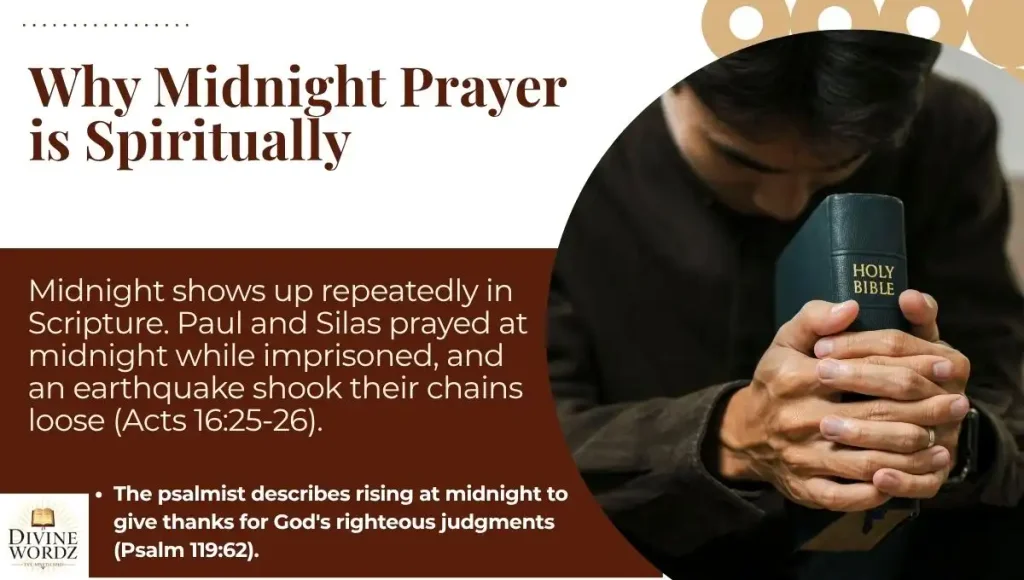
Midnight shows up repeatedly in Scripture. Paul and Silas prayed at midnight while imprisoned, and an earthquake shook their chains loose (Acts 16:25-26). Many point to this moment as the earliest biblical picture behind the modern dangerous midnight prayer.
The psalmist describes rising at midnight to give thanks for God’s righteous judgments (Psalm 119:62). Jesus himself sometimes spent the night in prayer before major decisions (Luke 6:12).
Beyond the biblical examples, midnight offers practical advantages. The house is quiet, distractions drop away, and many find their minds clearer once the day’s noise settles. Some traditions teach that midnight carries heightened spiritual activity, one reason dangerous midnight prayers often happen then.
Whether or not that belief holds literal weight, waking to pray reflects real commitment. This is part of why so many believers set an alarm specifically for a dangerous midnight prayer rather than praying the same words earlier in the day.
Biblical Principles for Midnight Prayer
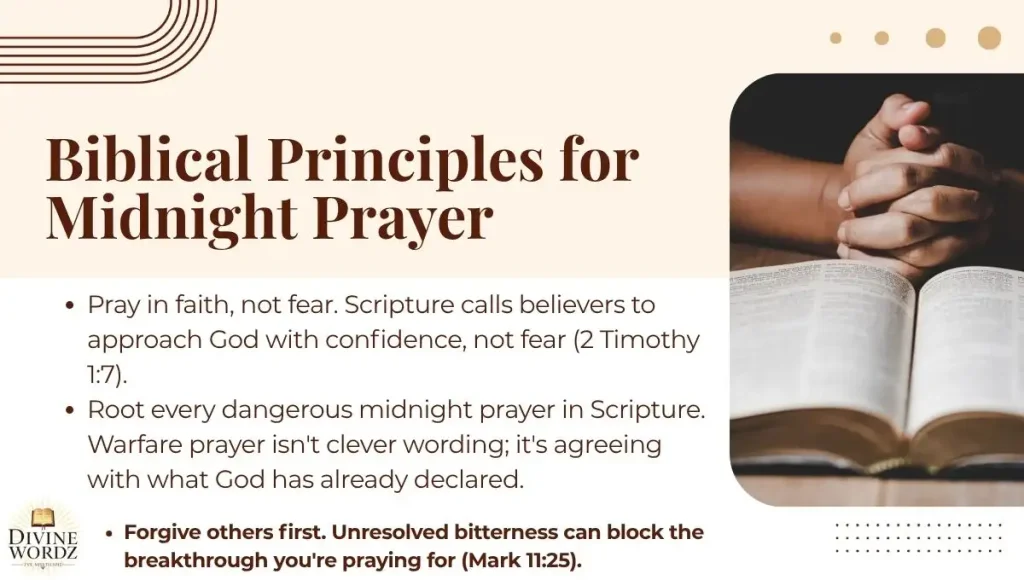
A few principles keep any dangerous midnight prayer grounded, no matter which prayer you use:
- Pray in faith, not fear. Scripture calls believers to approach God with confidence, not fear (2 Timothy 1:7).
- Root every dangerous midnight prayer in Scripture. Warfare prayer isn’t clever wording; it’s agreeing with what God has already declared.
- Approach God humbly. Boldness never replaces humility (James 4:6-7).
- Forgive others first. Unresolved bitterness can block the breakthrough you’re praying for (Mark 11:25).
- Trust God’s timing. A delayed answer doesn’t mean the prayer failed.
1. The Blood of Jesus Prayer
Built on Revelation 12:11, this dangerous midnight prayer draws on the Passover imagery of Exodus, where blood on the doorposts marked a household as covered. Praying the blood of Jesus over your life and family is a declaration of covenant protection, not a magic phrase.
A simple version: “Father, I plead the blood of Jesus over my life, my home, and my family tonight. Let every plan against me be silenced by the blood that speaks a better word.” It appeals to the one act of atonement Scripture says already secured victory, which is why this dangerous midnight prayer is often the first one believers reach for.
2. The Name of Jesus Prayer
Philippians 2:9-11 says God gave Jesus a name above every name, so every knee will bow at it. Acts 4:12 adds there is no other name by which people are saved. Praying in Jesus’ name isn’t a closing formality; it’s an appeal to His finished authority.
A short version: “In the name of Jesus, I stand against every scheme working to derail my purpose. At that name, every opposing force must yield.” This is one of the most repeated dangerous midnight prayers, since Scripture ties direct authority to the name itself.
3. The Fire of God Prayer
This prayer leans on Hebrews 12:29, which describes God as a consuming fire, and Jeremiah 23:29, which compares His word to fire. It’s linked to purification, the burning away of sin, compromise, or hidden works of darkness.
Sample line: “Let the fire of God consume every hidden work of darkness assigned against my life and household.” Use it carefully. It’s a request for God’s refining power, not a call for harm toward any person. Like every dangerous midnight prayer on this list, its force comes from Scripture, not from the person praying it.
4. The Psalm 35 Warfare Prayer
Psalm 35 is one of David’s imprecatory psalms, where he asks God to contend with those plotting against him. Praying it means asking God, the righteous judge, to fight on your behalf rather than taking matters into your own hands.
Intent matters most here. It releases a situation to God’s justice instead of feeding personal revenge. Pray it when you feel wronged, and let it push you toward trust rather than resentment. Among the dangerous midnight prayers in this guide, this one requires the most self-honesty about motive.
5. The Stronghold Breaking Prayer
Based on 2 Corinthians 10:4-5, this dangerous midnight prayer targets strongholds, patterns of thinking or behavior that resist change. Paul describes weapons that are “not carnal” but powerful enough to pull down fortresses and take every thought captive to Christ.
This is the most personal of the seven, since strongholds usually involve habitual sin or long-standing fear rather than an outside attacker. Pair it with honest self-examination. As a dangerous midnight prayer, it turns inward before it turns outward.
See More: June Bug Meaning: Origin, Spiritual Symbolism & Biblical Insights
6. The Deliverance and Freedom Prayer
Rooted in John 8:36, Galatians 5:1, and Luke 4:18, this dangerous midnight prayer asks for release from bondage, whether addiction, generational patterns, or emotional oppression. Jesus described His own ministry as bringing freedom to captives, and this prayer echoes that language.
Deliverance prayer often benefits from support. If a bondage feels too heavy to face alone, involve a pastor or trusted prayer partner rather than treating one session as a complete solution. This particular dangerous midnight prayer is rarely a one-time event; many pray it in seasons rather than a single night.
7. The Divine Judgment Prayer
This dangerous midnight prayer draws on Psalm 7:8 and Romans 12:19, which says vengeance belongs to God. It asks God, as righteous judge, to act justly in situations of ongoing harm or injustice.
This prayer is easily misused, so intent matters most. It should never become a tool for cursing a specific person out of anger. Used rightly, it hands a painful situation to God’s justice instead of carrying it yourself. Of all seven dangerous midnight prayers covered here, this is the one that most needs a posture of surrender rather than anger.
How to Pray These Dangerous Prayers Safely
Before praying any dangerous midnight prayer from this list, a few practices help keep the session healthy and focused.
Ensure Spiritual Covering
Stay connected to a local church and a pastor or mature believer who knows your situation. Isolation, with no accountability, raises the risk of pride or confusion going unchecked, and this kind of covering keeps a dangerous midnight prayer accountable rather than isolated.
Use Biblical Authority
Anchor every dangerous midnight prayer in Scripture rather than dramatic language. The power comes from agreeing with what God has already said, not from tone or volume.
Maintain Spiritual Discipline
Make prayer a regular rhythm, not just a crisis response. Believers who only pray during emergencies tend to burn out faster than those with a steady prayer life.
Prepare Your Heart
Confess known sin and forgive anyone you’re holding a grudge against first. A clear conscience matters more than the specific words you choose.
Warning Signs During Dangerous Midnight Prayers
Watch for these signs that a dangerous midnight prayer session needs adjusting:
- Chronic sleep loss from nightly sessions, leaving you unable to function the next day
- Growing fear or anxiety during prayer instead of peace
- Using prayer to target specific people out of anger rather than releasing situations to God
- Increasing isolation from church community or loved ones
- A creeping sense of spiritual pride or superiority
- Treating repetition as a formula that guarantees a specific outcome
If any of these show up, step back, talk to a pastor, and reset your approach before your next dangerous midnight prayer. Prayer should build faith and rest, not fear or exhaustion.
Denominational Approaches to Dangerous Prayers
Traditions don’t all approach dangerous midnight prayers the same way. Pentecostal and Charismatic churches favor direct, vocal deliverance prayer and treat midnight as strategically significant. Catholic tradition addresses spiritual opposition mainly through sacraments and, in serious cases, formal exorcism overseen by clergy.
Orthodox Christianity leans on the repetitive Jesus Prayer and a life of asceticism rather than isolated warfare sessions. Mainline Protestant churches are often more cautious about “spiritual warfare” language, favoring Scripture and pastoral care instead.
Across every tradition, the impulse behind a dangerous midnight prayer stays the same: dependence on God rather than personal power.
Most traditions agree on the basics: prayer should stay rooted in Scripture, pride is a real danger, and accountability matters more than dramatic wording. However a specific tradition frames it, the dangerous midnight prayer tradition itself spans nearly every branch of the church.
Biblical Weapons for Dangerous Prayers
Several tools appear consistently across Scripture when believers pray this way:
| Weapon | Scripture Reference | Spiritual Function |
|---|---|---|
| Blood of Jesus | Revelation 12:11 | Covering, protection, victory over accusation |
| Word of God | Ephesians 6:17 | Offensive weapon; discerns truth from deception |
| Name of Jesus | Philippians 2:9-10 | Authority over every opposing power |
| Prayer and fasting | Matthew 6:16-18 | Sharpens focus; breaks entrenched patterns |
| Praise and worship | 2 Chronicles 20:22 | Shifts atmosphere; often precedes breakthrough |
| Faith | Ephesians 6:16 | Shield against doubt and discouragement |
Frequently Asked Questions
Are dangerous midnight prayers biblical?
Yes. The language and themes come from Scripture, especially the Psalms and the passages on spiritual armor, which is where most dangerous midnight prayer language originates.
Can anyone pray these dangerous midnight prayers?
Any believer can pray a dangerous midnight prayer. Preparation matters more than status: confess known sin, forgive others, and approach with humility.
What time should I start praying at midnight?
There’s no strict rule. Many pray between 12 a.m. and 3 a.m., but consistency matters more than the exact clock time.
Is it wrong to pray against people?
Praying against a specific person out of anger differs from praying against injustice. Scripture points believers toward releasing judgment to God rather than using a dangerous midnight prayer to target someone.
Do I need to be part of a church to pray warfare prayers?
You don’t need permission to pray, but a dangerous midnight prayer works best with community support, especially in a hard season.
How long should a dangerous midnight prayer session last?
Length varies by person. A focused fifteen to thirty minutes often beats an exhausting all-night dangerous midnight prayer session.
What if I feel afraid during prayer?
Persistent fear is worth pausing over. Shift toward Scripture and worship, and talk to a pastor if it continues.
Can a dangerous midnight prayer replace daily prayer and church attendance?
No. It works best as one part of a broader faith life that includes regular prayer, church, and Scripture reading.
Conclusion
Dangerous midnight prayers draw their strength from Scripture, not from the hour on the clock or the intensity of the words spoken.
Each of the seven prayers here, from pleading the blood of Jesus to appealing to divine judgment, points back to a biblical truth about who God is. Used with humility, preparation, and accountability, they become a meaningful part of a believer’s prayer life.
The goal was never fear or spiritual performance. It’s deepened trust in God during the quiet hours, paired with the wisdom to recognize when a session needs rest, community, or pastoral guidance instead of another repetition. Approached this way, a dangerous midnight prayer becomes less about danger and more about drawing closer to God.

Welcome to Divinewordz! I’m Hasnain Raza. Christian Faith Writer | 6+ Years Bible Study Experience | Founder of (Divinewordz.com)
Sharing prayers, Bible Name Meaning and biblical wisdom to strengthen your faith.