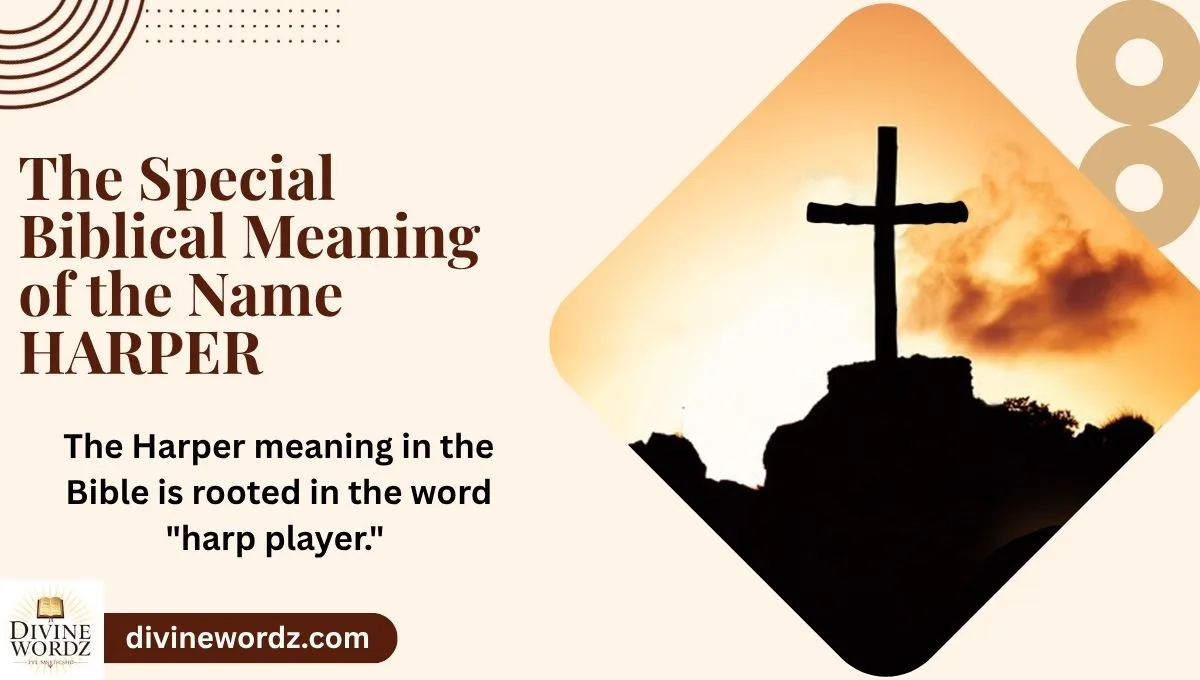
The Harper meaning in the Bible is rooted in the word “harp player.” Although Harper is not a biblical name, it is closely connected to the harp, a symbol of worship, praise, joy, and God’s presence. From King David to the worship in Revelation, Harper reflects faith, creativity, and devotion.
The biblical meaning of Harper represents a life of worship, encouragement, and God-given talent. Many Christian families choose Harper because it symbolizes faith, purpose, hope, and artistic expression. This guide explores the origin, spiritual meaning, biblical symbolism, and Scripture connections behind the name Harper.
The Etymology and Historical Roots of Harper
Harper comes from the Old English word hearpere and the Old French harpeur, both meaning “one who plays the harp.” It began as an occupational surname in medieval England and Scotland, given to musicians who performed at courts, churches, and village gatherings.
From Occupation to Identity
A medieval harper wasn’t just an entertainer. Harpers carried oral history, told stories through song, and held a respected place in their communities. Over generations, the occupation became a surname, and eventually that surname crossed over into a first name Harper.
The Modern Transformation
Harper shifted from surname to popular first name over the last few decades, and now ranks among the top 20 girls’ names in the United States, even though it started out mostly as a boys’ name. That shift mirrors other occupational surnames, like Mason or Cooper, that became mainstream given names.
Does the Name Harper Have a Biblical Meaning?
Harper isn’t a name found in the Bible. But the word behind it, harp, appears dozens of times across Scripture, tied to worship, prophecy, mourning, and celebration. Because of that, Harper carries what’s often called a meaning by association: no direct biblical origin, but real spiritual weight borrowed from the instrument it names.
The Harp in Biblical Scripture: A Deep Dive
Scripture references two main stringed instruments translated as “harp”: the kinnor, a smaller lyre-like instrument, and the nevel, a larger harp used in temple worship. Both appear throughout the Old Testament as tools of praise.
King David: The Archetypal Harper
David is the Bible’s best-known harp player. As a young shepherd, he played for King Saul to calm his troubled spirit (1 Samuel 16:23). Later, as king, he organized the Levitical musicians who led worship at Israel’s tabernacle (1 Chronicles 15:16).
The Psalms: A Harper’s Songbook
David wrote many of the Psalms, and several call for harp accompaniment. Psalm 33:2 instructs believers to praise the Lord with the harp, and Psalm 150:3 lists the harp among instruments used to worship God. The Psalms remain, in a sense, the original songbook of biblical harpers.
Prophetic Power in Music
Music and prophecy connect several times in Scripture. In 1 Samuel 10:5, a group of prophets play harps as they prophesy. In 2 Kings 3:15, the prophet Elisha calls for a harpist, and as the musician plays, prophetic insight comes over him. These passages suggest music can open someone to spiritual sensitivity.
Heavenly Harps
Revelation describes harps in heaven’s worship. Revelation 5:8 and 15:2 both picture heavenly beings holding harps while singing praises to God. The imagery suggests worship through music continues beyond earthly life.
Five Biblical Themes Embodied by Harper
Even without a direct scriptural mention, the Name Harper reflects five themes drawn from the harp’s biblical role.
Worship and Adoration
The harp’s primary biblical use is worship, and its link to Harper points to a life oriented toward praise.
Spiritual Warfare Through Praise
David’s harp playing drove away the distressing spirit troubling Saul (1 Samuel 16:23), linking music to resilience and spiritual defense.
Prophetic Sensitivity and Divine Inspiration
As with Elisha and the prophets in 1 Samuel 10, music could accompany prophetic insight, hinting at heightened spiritual awareness.
Ministry of Comfort and Healing
David’s playing soothed Saul’s torment. The name Harper carries an echo of using a gift to comfort others in distress.
Joyful Celebration and Testimony
Harps appear at biblical celebrations, from processions to temple dedications, tying the name Harper to joy and public testimony of faith.
The Spiritual Meaning and Biblical Symbolism of the Name Harper
Taken together, Harper symbolizes a life tuned toward God. In Scripture, the harp bridges the physical and spiritual worlds, turning ordinary sound into an offering. For someone carrying the Name Harper, that symbolism often gets applied personally: a reminder that everyday gifts, musical or not, can become acts of worship when offered with intention.
Character Qualities Reflected in the Name Harper
Sensitivity to the Holy Spirit
Like the prophets who played while prophesying, Harper is often linked to spiritual perceptiveness.
Creative Expression
Music is a creative act, and the name Harper carries strong ties to artistic gifts of all kinds, not only music.
Servant-Hearted Leadership
David served Saul before becoming king himself. His musical service is often read as an early lesson in humble leadership.
Courage in Calling
Playing for a troubled king took nerve. The name Harper evokes a quiet courage to use one’s gifts even in hard circumstances.
Bridge-Builder
Music crosses language and culture, and Harper suggests someone who connects people, easing tension the way David’s harp eased Saul’s.
Emotional Intelligence
David’s playing responded directly to Saul’s emotional state, an association that suggests attentiveness to others’ needs.
Also Read: 290+ Bible Verses for Instagram Bio: Short, Powerful Scriptures for Your Profile
The Role of Music in Biblical Worship and Spiritual Life
Music runs through the entire biblical narrative, from Miriam’s tambourine after the Red Sea crossing (Exodus 15:20) to the full ensembles of Levitical worship (1 Chronicles 25) to the songs described in Revelation. Scripture treats music as a legitimate form of prayer and prophecy, not mere decoration. Instruments like the harp, lyre, timbrel, and trumpet all appear as tools for approaching God, and that context is what gives the Name Harper its spiritual resonance even without a direct scriptural namesake.
Harper in Christian Culture and Modern Application
The Worship Movement
Modern worship music, from contemporary Christian radio to church worship teams, carries forward the same purpose biblical harpers served: leading people into God’s presence through song.
Creative Arts Ministries
Many churches now run creative arts or music ministries. Someone named Harper may feel natural affinity with these spaces, through singing, playing an instrument, writing, or visual art.
Intentional Naming
Christian parents increasingly choose names for their meaning rather than family tradition alone. Harper fits this trend, offering biblical symbolism without being an overused traditional Bible name.
Living the Harper Calling
Living out the name’s meaning doesn’t require musical talent. It can look like using any gift, teaching, hospitality, art, leadership, as an offering rather than a performance.
Biblical Names with Similar Spiritual Significance
Several names share Harper’s musical or worship-centered symbolism:
| Name | Origin | Spiritual Association |
| Harper | Old English | Harp player, praise and worship |
| Zamir | Hebrew | “Song” or “melody,” used in the Psalms |
| Asaph | Hebrew | David’s chief musician, credited with several Psalms |
| Heman | Hebrew | Levitical singer and musician (1 Chronicles 25) |
| Carmel | Hebrew | “Garden,” associated with fruitfulness and praise |
| Melody | English | Modern name tied directly to musical worship |
Powerful Scripture Verses for Those Named Harper
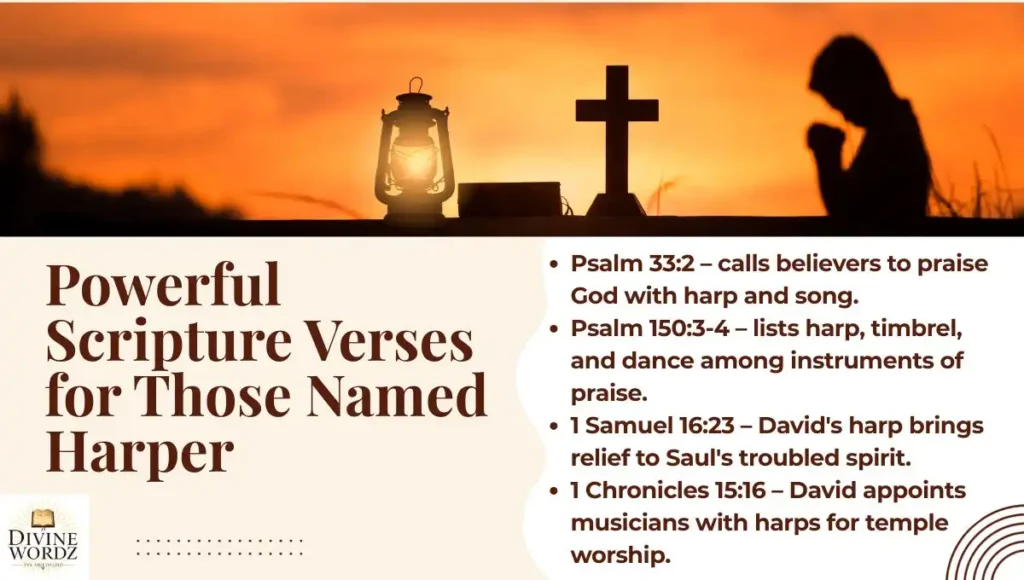
- Psalm 33:2 – calls believers to praise God with harp and song.
- Psalm 150:3-4 – lists harp, timbrel, and dance among instruments of praise.
- 1 Samuel 16:23 – David’s harp brings relief to Saul’s troubled spirit.
- 1 Chronicles 15:16 – David appoints musicians with harps for temple worship.
- Revelation 5:8 – heavenly elders hold harps as they worship before God’s throne.
1 Samuel 16:23: The Harper’s Defining Verse
This verse describes David playing the harp for Saul, bringing relief whenever the king’s tormenting spirit returned. It’s the closest thing to a defining “Harper verse” in the Bible, showing music’s power to bring peace, and giving the name its clearest scriptural anchor, even though “Harper” itself isn’t used as a personal name anywhere in the text.
Praying Over a Child Named Harper
Parents naming a child Harper often pray for the qualities the name evokes: a heart tuned to worship, sensitivity to the Holy Spirit, courage to use their gifts, and a life that brings comfort to others. A simple prayer might ask that the child’s life, in whatever form their gifts take, become an instrument of praise.
FAQs
Is Harper a biblical name?
No. Harper doesn’t appear as a person’s name in the Bible. Its meaning comes from the harp, a significant instrument throughout Scripture.
What does the name Harper mean spiritually?
The name Harper is often linked to worship, creativity, sensitivity to the Holy Spirit, and emotional comfort, themes drawn from the biblical harp.
Is Harper a boy or girl name?
Harper started as a mostly male occupational surname but is now given predominantly to girls in the U.S., though it remains unisex.
What Bible verse connects most to Harper?
1 Samuel 16:23 is the verse most associated with Harper, describing David playing the harp to calm King Saul.
Does the name Harper have Hebrew origins?
No. Name Harper is Old English and Old French in origin, though the Hebrew word for harp, nevel, carries similar worship associations.
What are good middle names for Harper?
Popular pairings include Harper Grace, Harper Faith, Harper Joy, and Harper Praise, names that echo its worship-related themes.
Why is Harper popular among Christian parents?
It offers musical, worship-centered symbolism without being an overused traditional Bible name, appealing to parents who want meaning and originality.
Can Harper be used for both genders?
Yes. Harper remains legally unisex, though current U.S. data shows it’s given to girls far more often than boys today.
Conclusion
The Name Harper carries no verse of its own, but it inherits something richer: the accumulated weight of Scripture’s relationship with music. From David’s harp calming a troubled king to the harps of heaven in Revelation, the instrument behind this name has always stood for praise, comfort, and closeness to God.
For parents choosing the name, or for anyone who carries it, Harper offers a quiet invitation: treat whatever gifts you have, musical or otherwise, as something worth offering. That’s a meaning worth keeping, whether or not it’s written explicitly in Scripture.

Welcome to Divinewordz! I’m Hasnain Raza. Christian Faith Writer | 6+ Years Bible Study Experience | Founder of (Divinewordz.com)
Sharing prayers, Bible Name Meaning and biblical wisdom to strengthen your faith.